
Redefining Currency 🌀
Cowries, cacao, & the systems that refused to separate value from life

I want to first start off by sharing a video that I was watching that sparked my excitement to write this post.
Melinda Camille left the United States, moved to Haiti, grows her own cotton, makes her own clothes by hand, and lives off the land she stewards. When asked how she survives without making money, she answered without hesitation: “I am the money. There is a currency system running in this body.”
She goes on: “These hands work the land that gives me the food. The land gives us the clothes. We still need our body. We still need our spirit. We still need our mind. We are the money.”
She describes what she wants to lead her life each day, she says simply: “I want my heart to be the currency.”
This is a woman living a sovereign, rooted life and building a school where children learn to grow cotton and make clothes with their own hands, one of her forms of currency. I wanted to share this because we often think to be truly sovereign and free we have to have so much money and things. I know I’ve definitely been conditioned to think this way. That once you get to a certain amount accumulated in your bank account that’s when you can be free and do what you actually want. Chances are, if you’re reading this, that don’t work for you, so let’s talk about currency.
Watch the full video with Melinda & Lens:
The Original Economists
Long before European traders arrived on the shores of West Africa, long before the Trans Atlantic slave trade interrupted millennia of civilization, our ancestors were running sophisticated economies. They were not primitive barter systems stumbling toward modernity. They were deeply intelligent architectures of exchange.
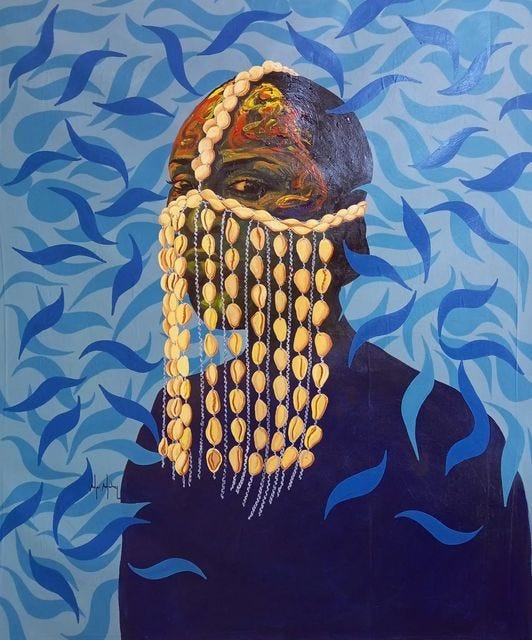
The cowrie shell. Cypraea moneta. Small, smooth, and luminous, the cowrie traveled trade routes that stretched from the Indian Ocean coast of East Africa across the Sahara and into the heartlands of West Africa, threading together civilizations the way rivers thread together valleys. The Yoruba called them owo. The Akan stored them in sacred vessels. In the kingdoms of Mali, Songhai, and Dahomey, cowrie shells moved through markets with the same confidence a dollar bill moves through a New York bodega today.
But here is what economics professors rarely teach: the cowrie was not just a medium of exchange. It was a symbol of fertility, of the ocean’s abundance, of the feminine principle that gives and sustains life. To hold cowries was to hold a piece of the living world. Value and spirit were not separated. Economy and cosmology breathed together.
Among the Iroquois people, wampum beads woven from white and purple quahog shells served as sacred currency, diplomacy, and memory. Wampum belts recorded treaties, preserved history, and sealed agreements between nations. They were not just money. They were living documents. They were the archive of a people’s word.
The Aztec empire used cacao beans. Think about that for a moment. The very thing that became Europe’s prized luxury, the thing we now melt into chocolate bars and sell for four dollars at a gas station, was once a form of money in Mesoamerica. It was edible. It had nutritional value. It was grown from the earth and returned to the body. It was currency that sustained life even in the act of circulating it.
These were sophisticated architectures of exchange built on ecological relationship, and social trust. The difference between them and fiat is not one of sophistication. It is one of values.
A World Where Economy and Cosmology Breathe Together
There is a word that does not translate cleanly into English, and that untranslatability is itself the teaching.
In West African traditions, the concept of àṣà: custom, tradition, the inherited way of doing, was never separate from how people exchanged, traded, built wealth, and cared for one another. The market was not a secular space. It was a sacred gathering. The act of exchange was a ceremony. The merchant who shorted a neighbor in a transaction was not simply making a bad business decision. They were disturbing a cosmic relationship. Disrupting the flow of something larger than profit.
This is not metaphor. It is a genuinely different operating system.
When cowrie shells held both monetary and spiritual value, when cacao beans could nourish a body and settle a debt in the same motion, when wampum belts simultaneously sealed a treaty and preserved a people’s memory. These systems were expressing a cosmology that said: the material and the sacred are not different worlds. They are the same world, seen from different angles.
What colonialism required, more than land or labor, was the dismantling of this integrated worldview and relationship. Because a people who experience the economy as a sacred relationship with land, with seed, with community, with the ancestors who cleared those fields and the children who will inherit them, cannot be easily convinced to sign away that land for paper. Cannot be easily reduced to a unit of labor to be bought and sold. The disconnection had to come first. You cannot commodify what a people consider sacred. So first, they had to make us stop seeing land as sacred.
So when we talk about building economies rooted in cultural preservation, we are not just being romantic about the past. We are engaging in a deeply political act. We are refusing the fundamental premise of extractive capitalism: that the economy is a machine, that value is only what can be measured, that what cannot be priced does not count.
A world where economy and cosmology breathe together can look like a great uncle teaching his niece to save seeds and understanding that transaction as simultaneously agricultural, spiritual, economic, and ancestral. It looks like a mutual aid circle where the trust between members is considered part of the asset, not just a means to access it. It looks like a community land trust where the language spoken on that land is treated as inseparable from the soil itself, both held in common, both sacred, both non-negotiable.
The original economists understood something we are only beginning to recover: that an economy which serves life must be of life. Rooted in it. Accountable to it. Humbled by it. The cowrie shell was luminous not just because it was rare and beautiful, but because it remembered the ocean it came from. Our economies can remember too.
What Fiat Actually Is
We have been taught to see the dollar, the euro, the pound, as real. Solid. Backed by something concrete and trustworthy. We have been taught to see paper as the reliable representative for wealth.
Here is the fact that lives beneath the economics textbooks: fiat currency is an agreement. Nothing more and nothing less.
The word fiat comes from Latin. It means let it be done. Or simply, by decree. Fiat money is money because a government says it is money, because enough people believe it is money, and because enough systems enforce that belief with sufficient consistency that questioning it feels irrational.
The United States formally severed the dollar’s connection to gold in 1971 when President Nixon ended the Bretton Woods agreement. After that moment, the dollar was backed by nothing physical. It was backed by the full faith and credit of the United States government. Which is to say, it was backed by trust. By collective agreement. By the ongoing social fiction that green paper with dead presidents and sigils printed on it can be exchanged for rent, groceries, and medicine.
This is not an argument that money is worthless. Collective agreements are enormously powerful. Our belief in the dollar is what makes it function. But it is worth sitting with this truth: the financial system that has been used to colonize, dispossess, enslave, and extract from Melanated and Indigenous peoples around the world is, at its root, a story. A story with immense consequences and karmic and monetary debt. A story upheld by armies, laws and institutions.
If their currency is a relational story, we are allowed to tell a different one.
Different Stores of Value: Thinking Holistically and Tangibly
A store of value is simply anything that holds worth over time and can be drawn upon when needed. Most of us were taught that only money fits that description, but that is a story told by people who benefit from us believing that.
If fiat currency is an agreement, then we have the capacity to make other agreements. We have the ability to recognize other stores of value. And some of the most important stores of value are ones that no central bank controls and no government can print.
Land is a store of value. Not land as commodity to be bought and sold and stripped, but land as relationship, as the ground of all generational stability. When our communities hold land collectively and in trust, we hold something that cannot be inflated away. Something that does not crash when markets collapse. Something that feeds children and buries ancestors and holds memory in its soil.
Seeds are a store of value. Seed sovereignty movements understand this viscerally. The seed that carries ten thousand years of adaptation to a specific climate and culture, that produces food requiring no purchased inputs, that can be saved and replanted and shared, that seed is wellth. Seed vaults exists because someone, somewhere, understands that genetic diversity is a form of capital that once lost cannot be recreated.
Skills and knowledge are stores of value. The ability to grow food. To heal with plants. To build with natural materials. To repair rather than replace. To ferment, preserve, and prepare food in ways that nourish deeply. These are forms of wellth that no recession can touch, that no bank can foreclose on, that no government can confiscate. They live in the body. They move through apprenticeship and love.
Relationships are a store of value. A deep network of trusting, reciprocal relationships is one of the most powerful forms of capital a person or community can hold. Who will help you when you need it? Who will vouch for you? Who will open a door? Who will hold your child when you are overwhelmed? And who will you do these same things for? These networks are social infrastructure, and they are worth more than any investment portfolio to a community navigating hard times.
Reputation and story are stores of value. Your name in a community. The legacy of your family’s integrity and service. These are ancient currencies that still function in every human community on earth, and they tend to be far more stable than anything printed on paper.
None of this means we turn our backs on financial knowledge or refuse to engage with money. We need money to operate in this world. In fact, this way of relating makes the way we circulate our money and work with financial information that more nourishing. The point is to hold it rightly. To understand it as one tool among many. To stop worshipping it and start stewarding it. To refuse to let the dollar be the only measure of what a life or a community is worth.
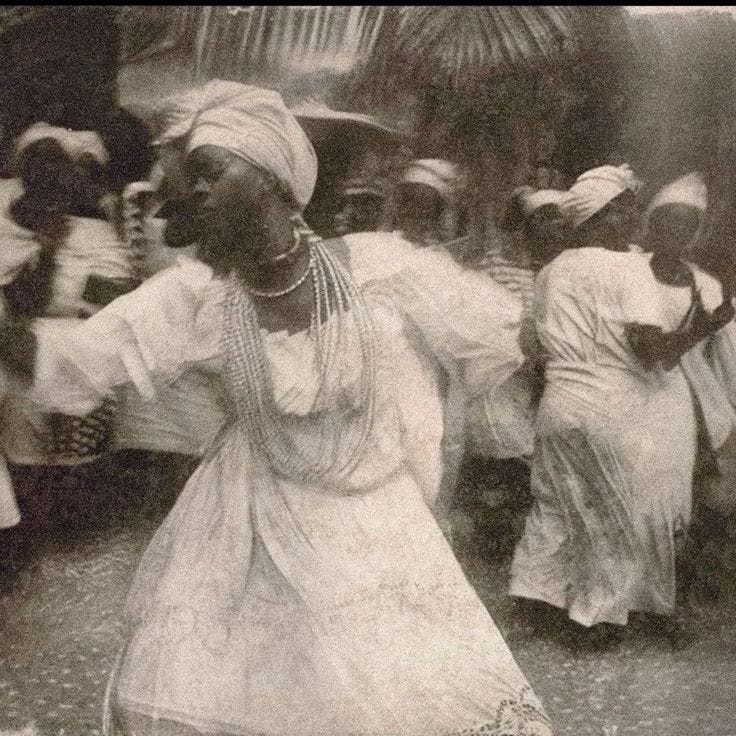
What we’ve talked about in this musing is not utopian fantasies. They are not new ideas dreamed up in a crisis. They are ancient knowing that lives in the bones of every people who ever grew food from seed, wove cloth from cotton, passed skills through touch and story, and understood that the health of a community and the health of the land were the same conversation. What is new is the moment we are standing in. We now have regenerative technologies, decentralized networks, cooperative structures, digital tools, etc that can carry trust across distance, and a growing global community of people who are done waiting for systems that were never designed for them to suddenly become generous. The invitation is to bring it all together. To let the wisdom of the ancestors meet the possibilities of aligned technology (whatever that means to you, our bodies are technologies too). To let the heart lead, as Melinda said, and let everything else be in service to that. This is the work of our time: not choosing between the ancient and the innovative, but weaving them together into something that can support our next leg of evolution. Something rooted enough to last and alive enough to naturally evolve. The ancestors dreamed in the direction we are building in.
But before we build outward, we build inward. Because every system begins with a story and imagination, and every story begins with what you know is possible.
Currency is being redefined in real time. Not just by economists or technologists, but by people like Melinda bathing in a river in Haiti, by grandmothers saving seeds, by communities choosing to trust each other more than they trust a bank, and by each one of us. The question is not whether a different world is possible. The question is what you are willing to recognize and act on as valuable, starting with yourself.
Until the next time, happy creating ⛲️🌱
Much Love & Gratitude
Stay Connected